
From powering mobile devices, US chip designer Qualcomm has tied up with Ola Electric to power its electric scooters. Qualcomm is providing the key 4G connected octa core android platform which provides connectivity, computing capabilities and enables rich immersive displays with power saving software.

Palo Alto-based electric carmaker Tesla has initiated talks with the government on the modalities of setting up fully-owned retail outlets. The company needs to comply with the foreign direct investment (FDI) guidelines related to single-brand retail, including local sourcing norms, to sell directly in India. At least two other foreign majors - Apple and Ikea - were engaged in talks with the government long before the sourcing norms were eased under the single-brand retail route.
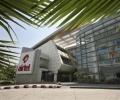
When, recently, Bharti Airtel announced a Rs 21,000 crore rights issue, analysts pointed out that its structure was similar to that of Reliance's issue in June 2020. One similarity is that shareholders in both companies have to pay only 25 per cent of the money on application. The rest is to be paid in two tranches. In Bharti Airtel's case, it is within 36 months; in Reliance Jio's, it is within 17 months.

In a major push towards 'Make in India', Apple Inc is manufacturing 70 per cent of the mobile phones, in value terms, that it sells in the domestic market, in India, according to sources aware of the development. This is a sharp rise from the figure of 30 per cent just two years ago and marks a major shift in Apple's strategy following the government's Production Linked Incentive (PLI) scheme that kicked off in FY'21. One of Apple's three vendors here, Foxconn, is currently manufacturing the best-selling model, the Apple 11, along with the Apple 10 and the Apple 12. Another contract manufacturer, Wistron, makes the Apple SE 2020. (The third, Pegatron, has yet to start production). The only models that are imported (they have limited volumes but high value) are the Apple 12 Pro and Pro Max.

The Chinese government is imposing severe restrictions on their tech companies - whether it is on data security, marketing practices or floating an IPO. Should this be music to the ears of Indian start-ups and home-grown private equity (PE) funds? Ask Indian start-ups and the answer is a resounding "yes".

Reliance Jio and Bharti Airtel have enough capacity to absorb over 113.9 million Vodafone Idea subscribers who are on 4G if Vodafone Idea has to shut operations.

The government will have to make substantial payments, as well as forego revenues in FY'23, if it wants to work on the survival of Vodafone Idea because it will have to extend the same incentives to the entire telecom sector. According to estimates, the industry has to spend around Rs 21,000-Rs 25,000 crore for spectrum which it bought on a deferred payment basis. Vodafone Idea has asked for a moratorium for another year (FY23). If granted, the government will have foregone the instalment payout for a third year in a row as it has already provided a moratorium for two years, giving telcos Rs 42,000 crore worth of relief.

Byju's has quietly moved into other global markets such as the UK, Australia and New Zealand. It recently launched operations in Latin America.

The Tata group's tryst with mobile services, with either CDMA or GSM technology, did not really fly, forcing it to close operations and write off losses. Now the group is back in the big game, this time straddling the telecom equipment, network and technology space in India as well as the global market. To this end, it is leveraging the opportunities that flow from 5G technology through open radio access network, or O-RAN. Recently, the Tata Sons' subsidiary Panatone Finvest acquired 43.3 per cent in Bengaluru-based telecom equipment manufacturer Tejas Network for Rs 1,850 crore and announced it would buy another 26 per cent of the voting capital through an open offer.

Discussion has started between blank check companies in the US and Indian PEs on possible deals in certain key sectors.

Mukesh Ambani's Reliance group has struck acquisition deals worth $4.2 billion with a dozen companies in just two years to expand its retail business. The latest purchase was of a majority stake in Justdial for Rs 3,497 crore. Elaborating on his acquisition strategy a few weeks ago during the AGM, Ambani stated that one of the key planks would be to acquire businesses that enhanced Reliance's offerings and experiences to customers and that they would be both physical and digital.

Vodafone Idea Ltd (VIL) CEO Ravinder Takkar did some plain speaking. In an analyst call after its quarterly results recently, Takkar said that the main stumbling block to raising fresh capital from investors is "pricing" - telecom tariffs, in other words. Nine months ago, the telecom company's board had cleared a proposal for raising Rs 25,000 crore from investors, after the promoters made it clear that they were not ready to pump in more money. But potential investors are concerned that without clarity on tariff hikes (there have been none for more than 18 months) they might just lose their money. The lack of visibility on raising tariffs has also impelled VIL to request the Department of Telecom (DoT) for a fresh reprieve by extending the two-year moratorium on paying its spectrum instalment of Rs 8,200 crore for another year till FY23.

Vodafone-Idea (Vi) has said the key hurdle it faces in raising fresh funding, despite interest from investors, is the 'pricing situation' which is also the reason why it has asked the Department of Telecommunica-tions (DoT) for another extension of the moratorium on payment of spectrum instalment by one more year. Responding to a question during an analysts' call on Friday after its quarterly results on the reason for the delay in fund-raising nine months after it was announced, CEO & MD Ravinder Takkar said: "We are in discussions with investors. There is continued interest in investing in the telecom sector in the country. "The biggest hurdle is that the overall industry is under stress because of the pricing situation." He said that once tariffs go up, it will create a significant amount of confidence.

Apple Inc's leading contract manufacturer, Taiwanese giant Wistron, has exceeded its investment obligation in India in just eight months, although the government's production-linked investment (PLI) scheme allowed it to complete the investment in four years. Between August 2020 and end March 2021, Wistron made an investment of Rs 1255 crore - 25 per cent more than the total investment it had committed to the government. Under the PLI scheme for mobile devices, the government had stipulated that each of the five participating global companies needed to invest Rs 250 crore every year for the first four years, totalling Rs 1,000 crore.

Chinese telecom gear giant Huawei Technologies has sought permission for access to the government's 'Trusted Telecom Portal' which went live on June 15 so that it can share details about the telecom products which telecom service providers have agreed to buy from it. The move is significant as sources close to the development say that, according to Chinese telecom companies' interpretation, the new National Security Directive on the telecom sector does not in any way prohibit them from participating in the process of selling telecom equipment of any kind to private telcos. The firm is waiting for a response from the government. It declined to comment.

Sensing a huge opportunity in the healthcare sector during the Covid-19 pandemic and its aftermath, private equity (PE) players are upping their investments in the space. According to data from research platform VCCEdge, the PEs have together invested a staggering $583.82 million in the first five months of 2021 in five deals, which is the highest investment in the sector in the last five calendar years - from 2016 to 2020. The second highest investment in the sector took place in 2017, when PEs invested $503 million in 18 deals, with an average deal size of $29. 9 million.

To create a community, the consumer can share the details of the offer with friends and family who want to buy the same goods.

Based on industry estimates, telecom companies, including Bharti Airtel, Reliance Jio, Vodafone Idea and BSNL, are expected to invest over $10 billion on buying 5G telecom equipment in the next five years as they transition from non-standalone networks to standalone 5G networks.

The Telecom Regulatory Authority of India (Trai) has directed the Cellular Operators Association of India (COAI) to make a presentation detailing the pros and cons of the controversial Indian 5G standard, also known as 5Gi, which the government has been pushing for. The move comes after serious differences emerged among telcos with regard to the technology's efficacy and implementation.

The promoter-brothers, distant cousins to IndiGo's Rahul Bhatia, are eyeing Air India's ground handling subsidiary to augment their aviation services business even as they make a big play in EVs.
 © 2025 Rediff.com - Investor Information - Advertise with us - Disclaimer - Privacy Policy - Sitemap - Feedback - About us - Terms of use - Grievances